
The Missing Glass
Presumed InnocentThis flow follows the tumbler from an ambiguous crime-scene trace to a lost exhibit and, finally, a private confrontation with its meaning.
increasing Bearing strength in each event
 decreasing
Bearing strength in each eventdecreasingAn Unknown Set of Prints
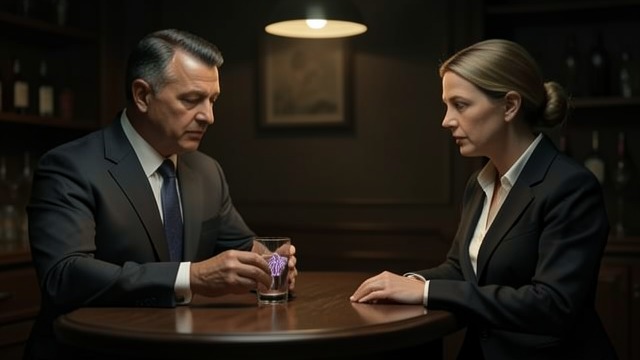
An Unknown Set of Prints
A trace on the bar
Detectives find a drinking glass on the bar in Carolyn's apartment. Three partial fingerprints are recovered, none belonging to Carolyn, but the comparison process is delayed by the police department's limited equipment and backlog.
Rusty pushes for comparison
Rusty eventually goes to the police laboratory and presses for a computer search. The resulting identification links two prints to him, an association that seems to place him in the apartment but cannot establish when he touched the glass.
A clue with two meanings
The glass is both evidence of possible familiarity with the apartment and a poor clock. Fingerprints can persist for years, so the laboratory can identify a person without establishing the date of contact.
The Exhibit Disappears
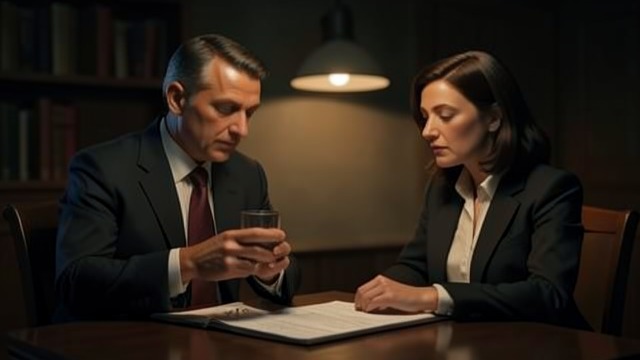
The Exhibit Disappears
A court order ignored
The defense requests access to the glass, but the prosecution cannot produce it. Judge Lyttle initially warns that fingerprint testimony may be excluded if the item remains missing, and the absence becomes an immediate question about evidence handling.
Testimony without the object
The state says the police collected and tested the glass, then asks the court to admit the identification anyway. Lyttle ultimately permits the testimony while warning jurors that they may treat the missing exhibit as grounds for reasonable doubt.
A tactical reversal
The judge's instruction blunts evidence that the prosecution had expected to make decisive. The missing object turns a technical chain-of-custody problem into a visible measure of the state's carelessness and credibility.
The Glass Returns
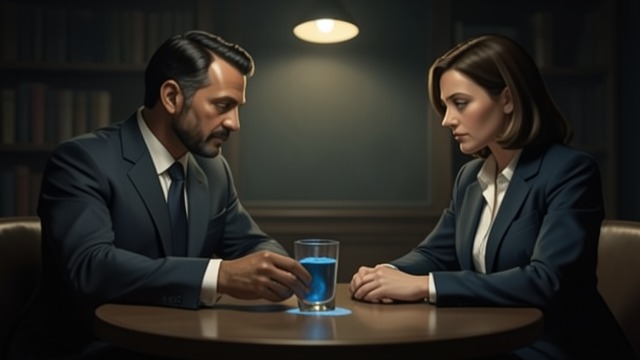
The Glass Returns
A concealed exhibit
Dan Lipranzer brings Rusty the glass, still marked with blue fingerprint powder. He explains that he had taken it to the laboratory, then found it had been mistakenly logged back into evidence without being returned to the correct place.
A private reckoning
Rusty recognizes that the familiar glasses resemble the one Carolyn had used. The set evokes the possibility that the object was selected to connect him to the apartment, though the recovered glass cannot prove who placed it there or why.
The question remains
Lipranzer's decision to keep the glass was illegal, and Rusty confronts his friend about having suspected him. The object offers no final answer; it makes their shared uncertainty materially present at the kitchen table.
The first investigation days in April
From the pretrial hearings to the third trial day
Christmas, after Rusty's acquittal
